Site icon Accelerate ACL

4 Important Types Of ACL Prehab Exercises

The most recent ACL prehab blog post focused on 8 ACL Prehab Goals To Hit If You Want To Go Into Surgery Feeling 100% (if you missed it, you can check it out here). Goal setting is an imporant part of the ACL recovery process, and everything you’ll do throughout the recovery process needs to be in alignment with your goals.

With these goals in mind today, you’ll learn a little more about the different types of ACL prehab exercises that will help you get there. It’s important for you to start here so that you undersand the importance of each type of exercise as you move towards your surgery date.

In blogs to follow, I’ll share the exact exercises Accelerate ACL clients as they strive to hit 100% before surgery, as well as 2 other scientifcally proven ACL prehab exercise routines.

So, without further adeiu, here are 4 important types of ACL prehab exercises.

1. Range Of Motion Exercises

You may notice that your range of motion is significantly limited immediately after ACL injury. In most cases, simple range of motion exercises are recommended early on with the goal of starting to restore normal range of motion. You may hear terms like “heel slides” and “quad sets,” which are two very simple, low load exercises that are designed to help you regain flexion (abilty to bend the knee) and extension (ability to straighten the knee).

As you perform this type of exercise, keep in mind, the goal of prehab is to decrease the guarding mechanisms that the body has developed as a result of the injury. Try to only work into ranges of motion that do not elevate pain levels beyond 2/10 and breathe appropriately throughout. If you are working into high levels of pain and holding your breath, you may find these exercises aren’t quite as effective.

2. Strengthening Exercises

Immediately after an ACL injury occurs, the brain changes the way it utilizes the muscles in the affected area. Over a short period of time, these muscles start to lose strength. When muscles lose strength, they are not able to create and absorb force as efficiently, putting joints, tendons, and ligaments at greater risk for injury. Therefore, strengthening exercises are needed to build strength in the affected muscles.

In general, strengthening exercises involve moving a resisted load through a range of motion. You can use a number of items for resistance, including your own body weight (think a simple squat pattern), resistance band, set of weights, or even the preferred form of resistance at Accelerate ACL, electricity.

3. Neuromuscular & Propioceptive Training Exercises

When the ACL tears, the brain loses important receptors, called mechanoreceptors, that give it feedback on where the knee is positioned in space. For instance, before an ACL injury, receptors in the ACL may relay information back to the brain saying something like “I’m starting to get stretched a little bit here – can you change your position or turn on a muscle more to absorb these forces?” Through the course of your life, the brain has learned to rely on these receptors to make determinations about your movement strategies.

After the ACL tears, these receptors are no longer able to relay the same information. The brain will need to learn to get this same information from receptors in other parts of the body. Therefore, dynamic, reactive exercises called neuromuscular (or proprioceptive) training are typically a part of a prehab program to help the body learn how to “re-wire” its feedback system and collect information from other body parts. As the brain re-wires these feedback loops, the knee can become more stable.

4. Perturbation Training Exercises

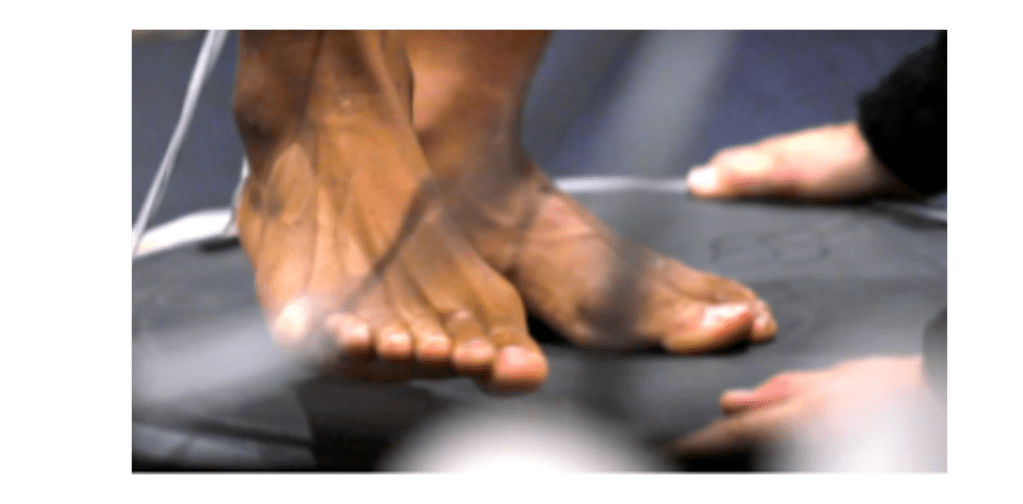
Perturbation training is a specific type of neuromuscular and proprioceptive training that typically requires supervision and utilizes a rocker board. The supervising person shifts the board in different directions in a controlled manner, while the person training balances in a double leg or single leg stance. The method is used to improve dynamic stability of the knee after injury and has been shown to improve knee kinematics, reduce protective co-contractions, and improve gait asymmetries.

Wrap-Up

Each one of these types of exercises plays an important role in the ACL prehab process. As always, I hope this post inspires you and the information is helpful – please feel free to check out anything and everything on the Accelerate ACL blog… and let us know if you’d like to see us write about any other topics.

Keep an eye out for future blogs, which will cover the EXACT exercises utilized by Accelerate ACL trainers during ACL prehab, as well as 2 other scientifcally proven ACL prehab exercise protocols.

The Ultimate ACL Prehab Guide
Everything You Need To Know About ACL Prehab In One Place

You could spend hours doing your own research on ACL prehab, but we’ve already done it for you. Get instant access to this free guide that includes prehab safety guidelines, goals you’ll need to hit, and the exercise programs that will help you get there. This is the most comprehensive ACL prehab guide on the planet.

Exit mobile version