Site icon Accelerate ACL

8 Exercises Utilized In The Accelerate ACL Prehab Protocol

Previous posts have covered the importance of ACL prehab, the goals you should strive to hit in prehab, and different types of exercises you can expect to be included in a quality ACL prehab program.

This post will dive one step further and reveal the exact exercises utilized in the Accelerate ACL prehab protocol. Keep in mind that within the Accelerate ACL protocol, the effects of these exercises are magnified by the Volta X and coaching by Accelerate ACL trainers.

The exercises utilized by Accelerate ACL have been chosen to train the muscles to activate properly through a full range of motion. When muscles activate properly, they create and absorb force efficiently, meaning minimal force goes into the joint or site of the injury.

As the body realizes that the muscles are functioning appropriately and it is safe for the knee to move, pain decreases, range of motion increases, normal gait is restored, and strength is developed.

These exercises can be easily modified to fit any stage of the prehab or ACL recovery process with the help of our trainers. As a general rule of thumb, we recommend staying within the guidelines of your doctor and/or physical therapist, and never working into a range of motion that causes pain >2/10.

Stage 1: Active Range Of Motion Component

Stage 1 focuses on helping the client to restore range of motion and eliminate compensation patterns.

1. Seated Marches: Seated marches are one of our most fundamental exercises and can be used to re-train the action of the quadricep in hip flexion, as well as the eccentric capacity of the quadricep, which often limits knee flexion after ACL injuries. When combined with our preferred prehab technology, the Volta X (more on it in a future post), the eccentric quad work is significantly intensified. 

2. Sit To Stands: Sit to stands are used to train the muscles to work properly through a hip flexion and knee flexion range of motion close to 90 degrees or less. If an athlete has been cleared for squatting, they are normally where we will start with a progression to assisted squats. Again, the progress achieved by this exercise can be magnified by the Volta X. 

3. Knee Touches: This is an extremely simple looking, yet sometimes difficult to perform, exercise that almost always results in an increase in knee extension when combined with the Volta X. You can find a detailed breakdown of this exercise in the last paragraph of this article.

4. Assisted Squats: Assisted squats are similar to sit to stands, but allow us to work into more extreme hip and knee joint angles. We’ll normally progress to this as a client demonstrates the ability to move through the sit to stand range of motion without limitation. Again, use of this exercise and the Volta X can really help open up ROM.  

Stage 2: Yielding Isometric Component

Stage 2 focuses on building strength and endurance at the most extreme joint angles. When we build strength and endurance here, the body learns to utilize muscles appropriately through the entire range of motion, even in the fatigued state.

5. Assisted Squat Isometric: In the assisted squat isometric, clients are instructed to hold at the deepest position of the assisted squat for as long as possible, training the necessary muscles to work in deep hip flexion and knee flexion.  

6. Isometric Wall Squat: The isometric wall squat is a variation of the assisted squat hold that removes the assistance from the upper body. Depending on the athlete’s capabilities, compensation patterns, and ability to execute the movement properly, one may be more beneficial than the other.  You can read a detailed breakdown of this exercise here.

7. Standing Glute Ham Isometric: The standing glute ham isometric puts the entire posterior chain at length from heel to the cervical spine, which runs all the way to the base of your skull. It is used to relieve tension throughout the posterior chain. Specifically as it relates to ACL injuries, it is a great exercise to train knee extension in a fatigued state.  

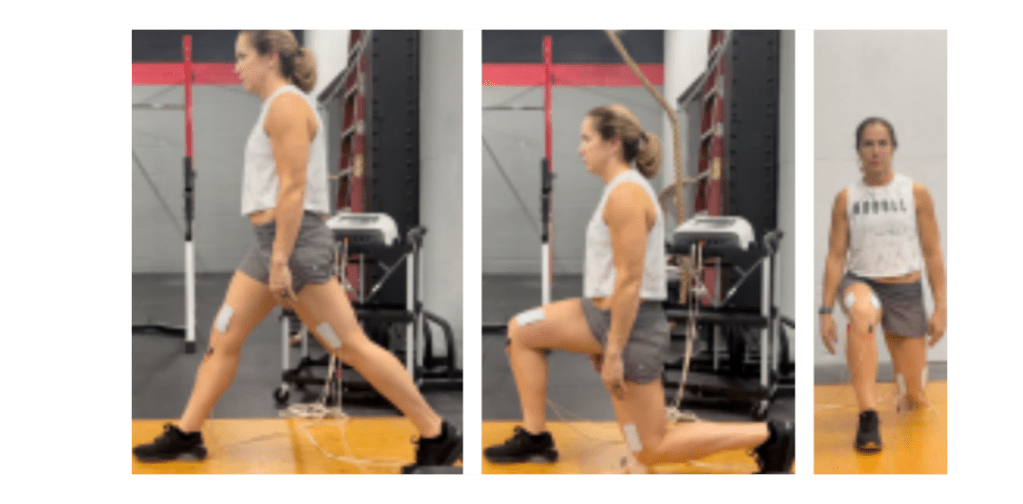
8. Isometric Lunge: The isometric lunge is probably the most difficult exercise of anything we perform with our athletes, particularly after an ACL injury. The back leg forces one of the big power producers of the quad, the rectus femoris, to load in a lengthened position. After an ACL injury, the body tries to decrease the use of the rectus femoris, so this is an important exercise to train.

Wrap-Up

Each one of these exercises plays an important role in the ACL prehab process. As I mentioned earlier, keep in mind that within the Accelerate ACL program, the effects of these exercises are magnied by the Volta X and coaching by Accelerate ACL trainers.

As always, I hope this email inspires you and the information is helpful – please feel free to check out anything and everything on the Accelerate ACL blog… and let us know if you’d like to see us write about any other topics.

Keep an eye out for tomorrow’s email, which will dive into what happens when our clients combine these exercises with the effects of a groundbreaking recovery and workout technology, the Volta X.

The Ultimate ACL Prehab Guide
Everything You Need To Know About ACL Prehab In One Place

You could spend hours doing your own research on ACL prehab, but we’ve already done it for you. Get instant access to this free guide that includes prehab safety guidelines, goals you’ll need to hit, and the exercise programs that will help you get there. This is the most comprehensive ACL prehab guide on the planet.

Exit mobile version